

EdEon News | June 1, 2026
Saving NASA’s SWIFT

The Neil Gehrels Swift Observatory — a $500 million gamma-ray telescope launched in 2004 — is in trouble. Solar activity stronger than expected has heated Earth’s upper atmosphere, which is leading to increased drag on the satellite and orbital decay. Without intervention, Swift will reenter and burn up within a few months. The scientific community wants to preserve the observatory’s unique capability to detect and turn its three telescopes to gamma-ray bursts.
NASA’s solution is LINK, a robotic rescue spacecraft built by Arizona startup Katalyst Space Technologies. Launching as early as June 1 aboard a Northrop Grumman Pegasus rocket, LINK will autonomously rendezvous with Swift, grab it using robotic arms, and fire its thrusters to push the observatory back to a safe altitude — all without any human hands-on involvement. The $30 million contract was awarded just last September, a blistering pace by space standards.
The mission is unprecedented: no spacecraft has ever been captured and reboosted when it wasn’t designed for servicing. Swift’s team has bought extra time by powering down instruments to reduce drag, and believe they have until September before the observatory drops below 300 km — the minimum altitude for LINK to have a realistic shot.
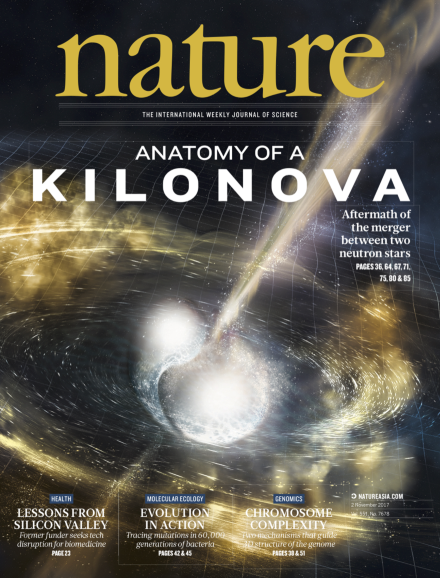
EdEon’s history is very much intertwined with the SWIFT observatory. Prof. Lynn Cominsky first secured funding from the NASA program in what are affectionately referred to as “the 1% days,” when government funding required that 1% of awarded funds to NASA programs be diverted to education and outreach work related to the program. This is where EdEon first found its niche: making beautiful, interesting, and educational material for NASA programs. In 2017, the journal Nature published an article about the observation of a kilonova thanks to a collaboration between LIGO, Virgo, and SWIFT, and used Simonnet’s impression of a merger of two neutron stars.
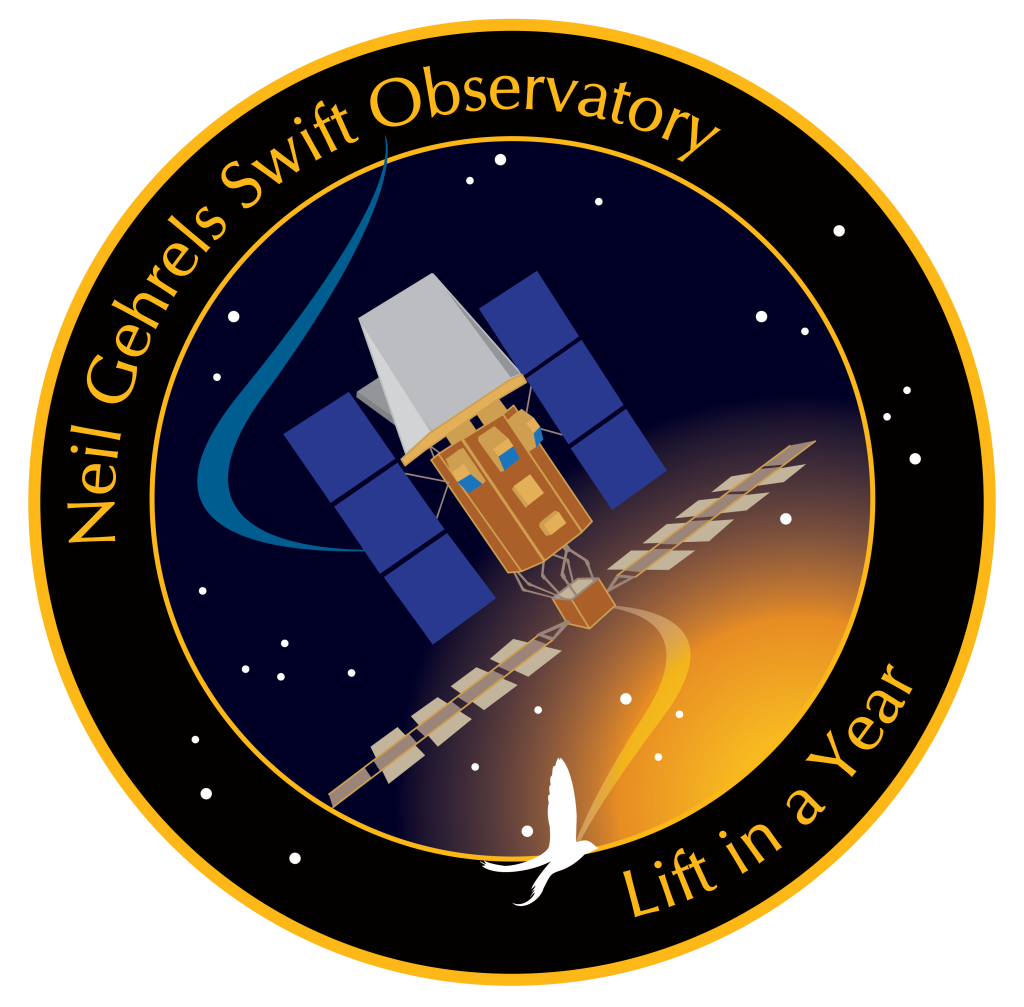
Aurore Simonnet was EdEon’s first hire more than 25 years ago, when EdEon was known as NASA EPO or “NASA Education and Public Outreach.” In the time between the beginning of our work on SWIFT and today, EdEon has secured funding from a more diverse variety of sources, like the Department of Education, and has since become EdEon STEM Learning. Today, Aurore has designed the logo for the effort to save SWIFT, which will be used for stickers, commemorative pins, and more.
For 25 years, EdEon has been the source of public relations and educational materials related to the SWIFT observatory, and we will be cheering LINK and its dedicated scientists and engineers on as they make history.